
Pro Wrestling in Cambodia - SEA Wrestling Magazine Republish
A deep dive into Cambodia’s forgotten pro wrestling history — from the world’s first national pro wrestling team to stalled promotions, vanished footage, and modern revival attempts. Why has pro wrestling struggled to take root in Cambodia, and could that finally change?
FEATURES
Simon Worden
1/13/20265 min read
Wrestling in Cambodia
With PSE: Asia’s recent event in Phnom Penh, SEA Wrestling deep dives into the wrestling past of Cambodia. From Olympic teams to AEW affiliated promotions, it hasn’t been a smooth ride in the kingdom so far.
Southeast Asia currently has five solid wrestling territories, each with up to three promotions running shows on a regular basis. For those unaware, they are Malaysia, the Philippines, Singapore, Thailand, and Vietnam. These nations have established their brands, wrestlers, and shows as mainstays with a growing fan following. Other Southeast Asian countries, however, have not been so fortunate, with failed attempts fading into the wrestling history books.
Despite its growing tourism industry, expat community, and openness to the “new,” Cambodia has struggled to develop a professional wrestling scene of its own. While attempts have been made, Paradise Sports Entertainment may now have the best opportunity to establish a regular series of pro wrestling shows — and there are certainly strong reasons to believe they can.
Professional wrestling had reportedly been a popular form of televised entertainment in Cambodia during the 1990s and early 2000s, likely due to the availability of cheap or free tapes. It’s unclear whether these were officially licensed by WWE or not.
The Cambodian scene seems to have truly begun in 2006, when Vath Chamroen, Cambodia’s first Olympic wrestler, created the idea of a national pro wrestling program. Inspired by WWE’s popularity in the country, Chamroen aimed to train competent amateur wrestlers in promos and showmanship to create a local form of the sport.
He claimed to have gained knowledge from time spent in North Korea, where he interacted with WCW and NJPW wrestlers during his Olympic training. According to WrestleMap, there were at least 16 wrestlers in the program, trained by Chamroen and supported by Coach Houk Chankim.
Training would bear fruit around March 2007, when two events were reportedly held at Olympic Stadium in Phnom Penh, likely as part of larger kickboxing cards. The only documented follow-up took place during a festival in Vihear Suar Village, Kandal Province, featuring Giant Vin and Chad Loon. It appears wrestling continued as undercard matches at kickboxing events across the country through 2008.
By 2009, things looked promising when a televised beach event from Sihanoukville aired, again featuring Giant Vin in the main event. The show was divided into episodes, though only a few have surfaced online. From the surviving footage — a multi-man contest — the wrestling was rudimentary and lacked psychology, as expected in any early outing. Still, the size of the crowd suggested this could have been the beginning of something popular in Cambodia.
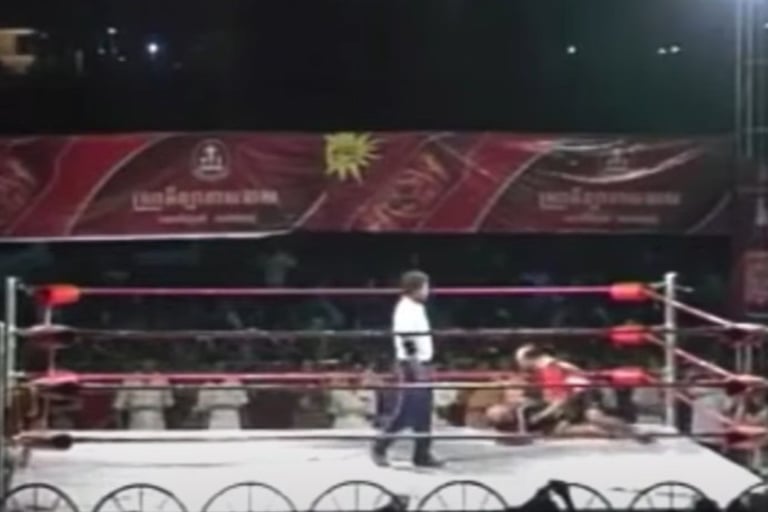
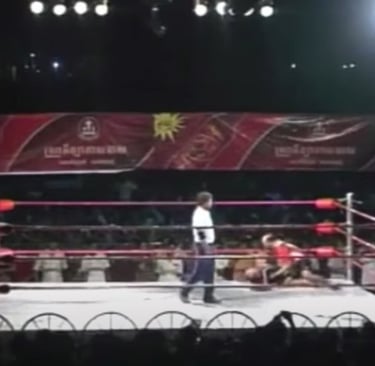
At some point in 2010, the promotion rebranded itself as Cambodia Champion Association Wrestling Entertainment (CCAW). Their most prominent show would also be their last: a performance at the Water Festival (Bon Om Touk), which can still be found online under the title NOKIA Concert. The event featured foreign wrestlers from Japan (Kyoko Inoue, Akiko Sato, Kiko Aono, and Kyu), complete with production values, pyro, and a four-way match to crown the first champion, The Rock Garuda, who defeated Copper Mouse, Iron H, and Highman. There was even a surprisingly entertaining guest Joshi match.
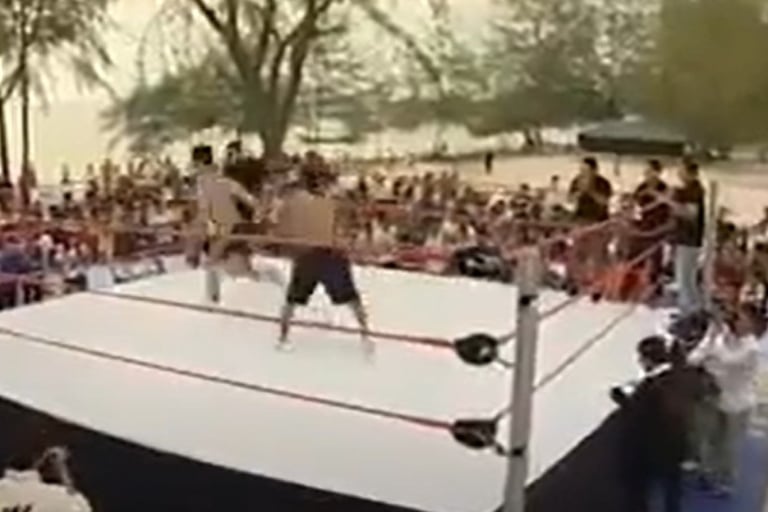
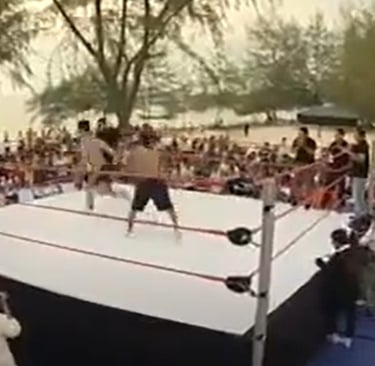
The shows were taped and likely broadcast domestically. Despite limited resources, the in-ring quality had improved noticeably by this time. However, production issues — including blaring WWF entrance music drowning out the crowd, who were seated far behind large fences — hurt the presentation. Although reports suggest the show was well received, there would be no follow-up.
Tragically, the day after the festival concluded, stories suggest a stampede on Phnom Penh’s Diamond Island bridge killed 351 people and injured nearly 400 more. Though wrestling events had already finished, the disaster overshadowed the entire festival.
Afterward, there was no continuation. The press mentioned the project for a couple of years, but by 2014 it was widely considered defunct. WrestleMap reportedly reached out to various individuals for updates but received no response.
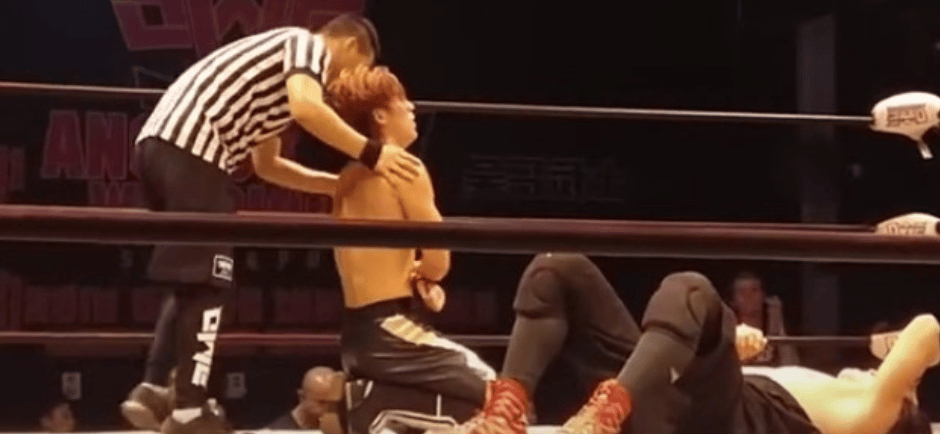
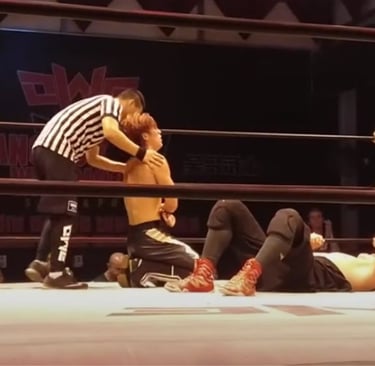
The next attempt wouldn’t come until 2019, when Oriental Wrestling Entertainment (OWE) tried to enter the Southeast Asian market. While their partnership with Singapore Pro Wrestling — which included an appearance by Kenny Omega — is better remembered, the promotion also established a training school in Siem Reap: the Cambodia Pro Wrestling Academy. The goal was to train local wrestlers with the help of visiting OWE performers. For a long time, a short training clip was thought to be the only surviving record of the academy, but further searches indicate that at least one small show may have taken place there.

However, with OWE’s closure and the onset of COVID-19, the project was abandoned by the end of 2020, once again leaving Cambodia without a professional wrestling presence.
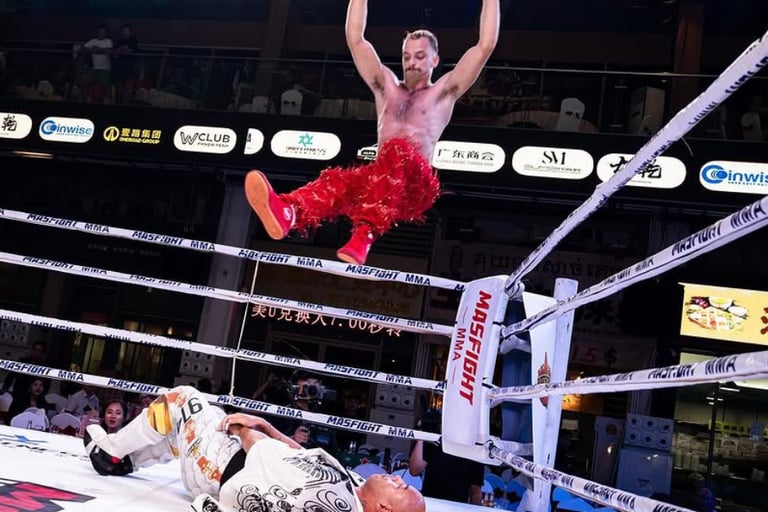
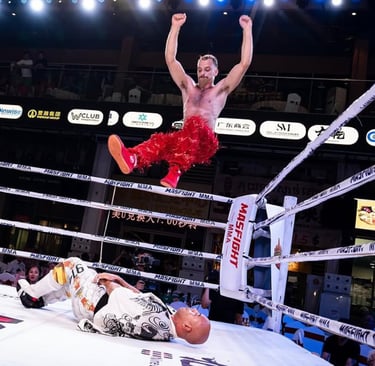
On September 27th, Paradise Sports Entertainment: Asia made a bold move as part of its regional expansion, running a small show in Phnom Penh. Hosted at a well-known Chinese seafood restaurant, the event drew a strong crowd and featured an exciting performance from Benji and Sunny Z. While it may have been a one-off, it could also signal future shows at the same venue — raising the question: could this be the start of something lasting?
In my opinion, the answer is a cautious yes. Economically, Cambodia continues to expand, and like other growing regions, it lacks regular live entertainment. Combine that with the large number of tourists and expats in its two biggest cities, and you have multiple ways to enter the market.
With the sizable Chinese population, these restaurant-based shows could become a lucrative attraction for that demographic. At the same time, a company like PSE might look to emulate Thailand’s Lahee 869 in Pattaya by finding a large bar space to host recurring shows. Alternatively, Siem Reap could prove even more profitable if framed as regular, family-friendly entertainment.
Of course, success also depends on cooperation with the local kickboxing scene — a lesson one British promoter learned the hard way in Thailand in 2003. But that’s another story.



SEA Wrestling
A source for Southeast Asia pro wrestling news.
CONTACT & Feedback Form
contact@seawrestling.net
CONTACT